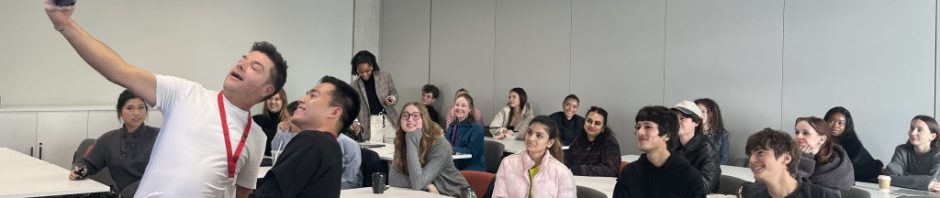
TPP Case Study 3 – Assessing Learning and Exchanging Feedback

Introduction and Background

Within the BSc/MSc Fashion Management 24/25 course, I am working with a new cohort of first year students as Unit Leader on Product Management, which looks at the entire lifecycle of a product, incorporating theories such as Triple Bottom Line Theory (Elkington, 2004), and Diffusion of Innovation Theory (Everett Roger, 1962).

Evaluation – Evidence

There is a bias towards holistic summative assessment at the end of the 12 week unit, with one mid-point formative assessment. Having taught the unit last year, with some students achieving below the required attainment rate, affecting the overall grade average, it is clear that this approach needs to change. Part of the problem seems to be that there is not enough time allocated for students to practise core elements of the assessment portfolio, and gain feedback before final submission. The other issue here stems from the fact that formative assessment does not count towards the final grade for the unit, and is therefore regarded as optional. The resulting poor attendance at formative assessment is contributing to low attainment at summative.

Deep learning: “It is widely accepted in educational circles that ‘deep’ learning is what educators should be developing in their students, as opposed to surface learning” (Danvers, 2007). In reality, the endeavour is to instil active understanding, as opposed to the passive accumulation of information, to be learned and repeated. I have noticed that the deep learners in class, who have taken on responsibility for their own development, turn up to every class & formative assessment, make good use of the reading and resources, ask questions and challenge me to generate such active understanding of the subject, develop improved skills in critical analysis and consequently perform better at the summative assessment. The question I asked myself when planning the unit for this year, was “how do I inspire all students to develop such engaged learning?”

Moving Forwards

Constructive alignment: In order to maximise engagement and attainment across the group, I am building in more problem based teaching during seminars, in an acknowledgement that such a diverse cohort will learn in different ways, and achieve at variable rates throughout the unit. At the beginning of each seminar session we will discuss and agree key objectives and clear learning criteria (Biggs, 1999), taking into account any questions or concerns the students may have. I anticipate that encouraging the students to participate in generating the objectives will lead to a greater level of motivation, and develop learning at a deeper level through a focus on key tasks, facilitating peer to peer discussion & collaboration.

Organisation of assessment: In addition to the above I have instigated a second formative assessment and stressed with the students that these formatives are not an ungraded ‘test’, as appears to be the perception, but an opportunity to receive feedback and reflect on their work prior to summative submission, helping them to achieve a better grade overall.

“Assessment should facilitate reflective practice, enabling students to evaluate their own learning process and apply feedback effectively.” (Davies, 2012, p. 10)

The formatives will be organised in small groups of up to 6 students. It will give them increased opportunities to practice core elements of the summative assessment, gain peer to peer as well as tutor feedback, and hone their presentation skills in a smaller group environment.

As a tutor, this approach will give me greater opportunity to reflect on and assess each students progress more clearly, leading to an understanding of who might need a greater level of support prior to summative submission.

Referencing

Davies, Allan (2012), Learning outcomes and assessment criteria in art and design. What’s the recurring problem? University of Brighton, Faculty of Arts. Available at: http://arts.brighton.ac.uk/projects/networks/issue-18-july-2012/learning-outcomes-and-assessment-criteria-in-art-and-design.-whats-the-recurring-problem

Elkington, John (Ch 1) The Triple Bottom Line : Does It All Add Up, edited by Adrian Henriques, and Julie Richardson, Taylor & Francis Group, 2004. ProQuest Ebook Central. Available at: https://ebookcentral.proquest.com/lib/ual/detail.action?docID=430036. (Accessed 28 Feb 2025)

Rogers, Everett M.. Diffusion of Innovations, 5th Edition, Free Press, 2003. ProQuest Ebook Central. Available at: https://ebookcentral.proquest.com/lib/ual/detail.action?docID=4935198. (Accessed 5 March 2025)

Danvers, J., 2007. Assessment in the arts: qualitative and quantitative approaches. Teachers’ Academy Papers, p174. Available at: https://d1wqtxts1xzle7.cloudfront.net/52619356/TA_book-libre.pdf?1492171700=&response-content-disposition=inline%3B+filename%3DExPLORING_THE_LINKS.pdf&Expires=1741171891&Signature=XI6-8cfhTcRQLjLjk06IsJ6-837LZgSkhPVkpRFWD3Bcjl00VSwf4-kIFT3a~c1Dgcys00ggEWwci~gAi1XG8X1vGAVMD0HwAnFMmPixdDKUtuA7ExlL9adUUeq71X5wsGbBao50UUfLDfMYn4AlCSE8CFL5myLrj8ZqNGmHtJiCam1JMHeJ6Z-RVqYigOiNzMSWIGc5stFw270h0fvmzTz~roQ0aKVVdBtmqCFqiHS8uMokGGdwHLMY0tM67CGSEGborkzNOXiGCj–qtXV5hXvVBJUCghR~6hAx6sHUwt1uHyerg1Qy73hp8f-gB3UeP8auEiMStN5dmAuYM4gfA__&Key-Pair-Id=APKAJLOHF5GGSLRBV4ZA#page=175 (Accessed 5 March 2025)

Biggs, J. What the student does: teaching for enhanced learning, Higher Education Research & Development, Vol.18, No.1. 1999. Available at: https://www.tandfonline.com/doi/pdf/10.1080/0729436990180105 (Accessed 5 March 2025)

Posted in Theories, Policies & Practices | Tagged , , , , | Leave a comment

TPP Observation (Eva Feld Observing Julia Redman)

Record of Observation or Review of Teaching Practice        

Session to be observed/reviewed:

Seminar: Exploring Fashion Forecasting & Trend Research

Size of student group: 35 students

Observer: Eva Feld

Observee: Julia Redman

 
Note: This record is solely for exchanging developmental feedback between colleagues. Its reflective aspect informs PgCert and Fellowship assessment, but it is not an official evaluation of teaching and is not intended for other internal or legal applications such as probation or disciplinary action.

Part One
Observee to complete in brief and send to observer prior to the observation or review:

What is the context of this session within the curriculum?

Course: BSc/MSc Fashion Management, London College of Fashion, Unit: Product Management. The seminar is held after a morning lecture on the topic, followed by a guest speaker from WGSN. We will be in the second week of teaching on this unit, just after the introduction week.

How long have you been working with this group and in what capacity?

This will be my second week with this group, as Unit Lead and Lecturer.

What are the intended or expected learning outcomes?

The students will start researching fashion trends and building mood boards for a SS26 collection, for a brand they have chosen to study for the unit assessment. They will be discussing their final choice of brand with me during the seminar.

LO1 An understanding of fashion forecasting and design management processes and their role in the creation of sustainable fashion product (enquiry). 

What are the anticipated outputs (anything students will make/do)?

To finalise their brand choice and begin building mood boards for colour, shape, prints & graphics and fabrics.

Are there potential difficulties or specific areas of concern?

This is a 40 credit unit for which the students will have to produce a 5 part portfolio for assessment. Keeping up with the workload is a challenge, so at this stage effective planning to achieve the desired outcome is critical.

How will students be informed of the observation/review?

They will have been verbally informed during the morning lecture.

What would you particularly like feedback on?

Am I communicating requirements and activities effectively?

How will feedback be exchanged?

Written feedback as per the requirements of this form.

Part Two

Observer to note down observations, suggestions and questions:

  • Students all on time
  • Adoption of Innovation & Trend, setting the associated task, clear verbal and written communication, additional help highlighted in form of previous student’s work
  • 1. C Sprint 2026 Trend Analysis: Structure clear, content presentation very clear
  • Natural, illustrative and very clear way of speaking to the students.
  • Checked the student’s understanding
  • Reiteration of the LO’s: mood board and 5th board distilling the information down, should provide orientation to the student’s brand SS 2026 suggestion. Brand DNA.
  • Student question: What is the 5th board’s purpose? /Student question: What are the 4 board’s purpose? clarification: explanation of purpose (trend, market orientation, positioning) provided clear, insightful conversation with the students for clarification.
  • PESTLE & WGSN STEPIC: introduced to help students guide their writing, highlighted “Qualify statements with research/ evidence/ citations.”
  • Announced to visit each group/ table to help with the tasks for the remainder of the seminar: For each student the brand choice will be finalised and discussed.

I wonder:

  • From the conversations of each group table, will the rest of the group benefit from what is discussed? If so, how could this be shared concisely?
  • Would the groups waiting to be seen benefit from being given a specific time to make the most of the waiting time?
  • Students seemed clear on the task which remained clearly outlined on screen. They seemed at ease and comfortable asking questions for clarification at all times, which is great. They were at ease to leave the classroom shortly and found adequate moments to do so. All students were working on the task on their laptops individually, sometimes exchanging some thoughts (therefore the joint group table set-up seems preferable).

Overall, a clearly structured and engaging seminar! Thank you for being able to observe it.

Eva Feld

Part Three

Observee to reflect on the observer’s comments and describe how they will act on the feedback exchanged:

Thankyou for your feedback Eva, it was great to hear that you thought my methods & communication were clear and insightful. You made a very good point about the group conversations, and how the rest of the group could benefit. As a result I have made a concerted effort to implement greater sharing of student questions with the wider audience, before sharing my thoughts/response with the whole class. As a technique, it appears to be helping me manage the time more efficiently, as I am not answering the same question more than once. Seems obvious now that I have implemented it, but your pointing this out gave me real food for thought!

I tend not to advise a time, purely because I want them to stay in the room, for the most part, and work on their portfolio whilst I am making my way round. I have found that if I give them a later time, they tend to disappear and not come back, which has an impact on their ability to achieve their desired outcome at summative submission. I think they really benefit from being able to use the time to discuss the assignment with their peers, particularly at this early stage, as they are formulating their ideas & strategies. However, your observation has inspired me to consider maybe introducing a more structured way of doing this.

I’m glad you enjoyed it too!

Posted in Theories, Policies & Practices | Tagged , , | Leave a comment

TPP Observation (Julia Redman Observing Eva Feld)

Record of Observation or Review of Teaching Practice        

Session to be observed/reviewed:

Seminar: Brand analysis and Design Alignment

Size of student group: 24 students

Observer: Kwame Baah, Julia Redman

Observee: Eva Feld

 
Note: This record is solely for exchanging developmental feedback between colleagues. Its reflective aspect informs PgCert and Fellowship assessment, but it is not an official evaluation of teaching and is not intended for other internal or legal applications such as probation or disciplinary action.

Part One
Observee to complete in brief and send to observer prior to the observation or review:

What is the context of this session within the curriculum?

Course: Innovative Fashion Production, London College of Fashion, Unit: Connecting Production to the Consumer. The seminar is held after a morning lecture on the topic. We will be in the second week of teaching on this unit, just after the introduction week.

How long have you been working with this group and in what capacity?

Since the start of the academic year 24/25 as a lecturer and tutor on a previous unit (Business Models & Fashion Production)

What are the intended or expected learning outcomes?

Within their set groups of 4-5 people, the students will start negotiating a collection for a brand they have chosen. This will include the range of garments, materials and the parameters of visual alignment to the brand. The collection must embody a suggested brand innovation of their choice within the limits of the industry brief.

LO: The groups should discuss these topics, negotiate their strategy and divide tasks amongst them during the seminar.

What are the anticipated outputs (anything students will make/do)?

To capture the decision-making process on a shared document (e.g. Miro) to be able to track progress and identify areas of improvement. 

Are there potential difficulties or specific areas of concern?

In the previous year, students and groups would need time to get used to one another and thus come to address the tasks with different speed. In other words, some tasks will need one group little time, another will need the same group significantly longer, which across the groups turns out to be very heterogeneous, depending on their individual strengths, weaknesses and expertise and that of the group as a whole.

How will students be informed of the observation/review?

They have been informed verbally in the previous week and will be reminded in the morning lecture on the observation day. 

What would you particularly like feedback on?

Am I communicating the tasks effectively?

How will feedback be exchanged?

According to the observer’s preference.

Part Two

Observer to note down observations, suggestions and questions:

Observer: Julia Redman

23 students, all on time.

Considered set up for working effectively in groups. Introduced the brand task and asked questions of the group to understand their progress to date, and their understanding of the task at hand. Asked students to use their knowledge from the previous unit.

Clear and specific instructions for feeding back to the class on the screen for students to refer back to.

Would suggest asking the question directly to each group in turn, to encourage and understand level of participation/engagement for each group.

Followed up by giving attention to each group individually, explaining and asking more detailed questions to encourage explanation of their chosen brand, its strategies, products, supply chain, sustainability, consumer etc. All groups appeared engaged, and were discussing/assessing/researching the task.

Very calm, conversational style of teaching, clear explanations/questions. 

Encouraged students to share vocally with the rest of the group – would suggest advising students to stand up when speaking to the class, to enable everyone to hear, whilst practising their presentation skills.

Re-explained the ethos of Rey-House, and that this is a necessary integration into the brand project (collaboration or brand extension).

Good use of Miro boards to record progress.

Spent time with each group towards the end of the seminar, to ensure that the students knew what they needed to be working on outside of class.

Part Three

Observee to reflect on the observer’s comments and describe how they will act on the feedback exchanged:

I agree with Julia that the separation of the tables worked well to have group members closer to each other to better communicate. Similarly, the engagement of the groups is high, which was already prevalent in the previous unit.

I’m pleased to hear that the instructions given to the students were “clear and specific”, as Julia wrote. Communicating effectively with my students, who have different levels of English language capabilities, is on the forefront of my mind when preparing seminars. I will also continue to check understanding with my students. The Miro board use, as Julia observed, improves communication as well, as I can write down to reiterate what I have previously said verbally.

Presentation skills is a good topic to have been raised by Julia. Admittedly, I didn’t want to push the student quite yet too far out of their comfort zone, prioritising participation by letting them use their preferred method of response, even if it is a very quiet whisper.  However, I agree that as a consequence, the student’s voice could not be heard by everyone and, if I remember correctly, I had to repeat it out loud to the rest of the class.

On the other hand, in my opinion, Julia is correct. I should use the upcoming seminars to give the students the opportunity to practice their presentation skills in a familiar environment with me, before they will present with all tutors present for formative assessment.

For the purpose of not catching the students unaware which may trigger anxiety, I should let them know during the seminar, whilst explaining the next activity. I will instruct them in order to practice their presentation skills to respond to the whole class standing up and as an option, they can use their notes as guidance or read out from.

Posted in Theories, Policies & Practices | Tagged , , | Leave a comment

TPP Blog Post 1 – PGCert “A reflection on the first reading and workshops”

As I approached the first set text reading, prior to our first workshops, I was full of optimism and enthusiasm for the task in hand, and feeling pretty confident that it wouldn’t be too taxing or take too long. The literature set was:

“The design critique and the moral goods of studio pedagogy” (MacDonald & Michela, 2019)

A few paragraphs in, however, and I began to realise the enormity of this one, seemingly simple task. I had clearly underestimated the command of academic language required and the patience necessary to read the paper several times in the hope of understanding it! I was rapidly appraising my own professional development to date, and realising the need to adopt a different approach. This left me feeling a little vulnerable, but determined to enhance and develop my speed and reading skills in order to keep up.

Getting back to “the design critique and the moral goods of studio pedagogy” my interpretation of this complicated text is as follows.

The critique, or “crit” forms part of the design studio ecosystem, and is understood to have an impact on student development, regardless of historical and cultural factors. The critique itself is an examination or evaluation of an idea, phenomenon or artefact and is the primary method by which instructors evaluate a students learning, knowledge and ability. The critique, which can be undertaken informally in class or in tutorials, or more formally during formative or summative assessment, is used to communicate knowledge and provide a framework for professional development.

However, critiques can also cultivate fear and anxiety – it is important to note that each student may react to such an evaluation in a different way, and to adapt techniques accordingly. Effective, and empathetic methods of implementation are key to creating a positive environment and outcomes.

In the design studio, most critique is verbal, unstructured and unpredictable, requiring instructors to respond and exercise judgement rapidly and articulately. It is both an art form and a practical demonstration of teaching practice which, in my opinion, requires skills that can be learned and enhanced over time.

My own critiques in teaching have taken a variety of forms, including verbal one to ones, presentations and feedback (including peer to peer) in class, formative assessments and group tutorials, as well as summative assessment with written feedback. I have found all to be useful in understanding student strengths and weaknesses, and how to then tailor my approach to help each individual to achieve the best possible outcome.

I have generally found that critiques work better face to face, rather than written or online. Where a student is struggling, I have often added in an extra tutorial to go through their written feedback face to face, for example, to ensure that they have a full understanding of how to improve their submissions.

Understanding the social practices in which people engage are foundational to the human experience. The “goods” of a practice was also a new concept to me, and as I understand it, are the aims that push the participants, our students, to accomplish something. Essentially, in relation to teaching practice, the “goods” relate to the creation of situations that promote learning.

Such a situation may then be an endeavour to encourage students to think and act differently to achieve better results, to propose and challenge participants to ask new questions, define new possibilities and look for innovative techniques and interpretation in their studies.

A critique might, therefore, be one way to encourage the flow of ideas, and develop more meaningful relationships with students. It is one approach, within a broad variety of learning and teaching techniques, that drive motivation and engagement, ensuring that all students flourish.

It is important to acknowledge that every student will progress at different rates, and at different levels; creating the right environment, a “safe space” for them to open up and participate, to develop their own ideas and solutions to the often complex and conflicting problems that they may be faced with. Delivering a challenging and cohesive balance between academic excellence and readiness for the working world is key to engagement and attainment.

The reading undertaken was followed up with a healthy debate, during our first workshops, looking at what equal participation looks like in the classroom, and discussion about how we can “mix it up” to encourage collaboration. We considered the concept of dynamic movement, and how this can influence learning and the uptake of information. Having been introduced to the concept of the “walking meeting” by a friend of mine who is the founder of Wellity, one of the UK’s fastest growing facilitators of workplace wellbeing, we all agreed that there may also be a place for the “walking tutorial”.

In summary, variety and an adaptable approach seem to be key, with elements of critique, debate, challenge, group work, equal access and participation, and peer to peer learning all playing a part in the delivery of engaging content, and ultimately, student attainment. My own teaching practice will benefit from the knowledge and broader understanding that I have gained, and ultimately this will be borne out in my face to face sessions by delivering using a variety of different techniques, to create an element of surprise, hopefully excitement about the content and improved engagement.

References

Gibbs (1988), ‘Reflective Learning Cycle’ via University of Cumbria. Available at: https://my.cumbria.ac.uk/media/MyCumbria/Documents/ReflectiveCycleGibbs.pdf Accessed 14.02.25

Macfarlane, Bruce and Gourlay, Lesley (2009), ‘The Reflection Game: Enacting the Penitent Self’, Teaching in Higher Education, Vol.14, No.4, p455-459. Available at: https://www-tandfonline-com.arts.idm.oclc.org/doi/full/10.1080/13562510903050244#d1e232 Accessed 14.02.2025

McDonald, Jason K. and Michela, Esther (2019), ‘The design critique and the moral goods of studio pedagogy’, Brigham Young University, USA Accessed 14.02.2025

Posted in Theories, Policies & Practices | Tagged , , | Leave a comment

Hello PGCert 25/26!

  Hello, my name is Julia Redman, I am a lecturer on the BSc and MSc Fashion Management at LCF, Unit Leading on both Product Management and Sustainable Design Management. I have over 30yrs of experience as a buyer, and head of buying for a variety of British brands and retailers, so my teaching to date has been largely industry based, rather than academic.

  The focus of my teaching is on fashion apparel and the product lifecycle, discussing everything from conceptual ideas, to research and planning, design and development, range building, supply chain, fashion logistics and retail. Sustainability and ethics form a major element in every aspect of my teaching, and I hope that through the content and interactive learning opportunities I am creating, that my students are discovering and engaging with the practical aspects of applying sustainable/ethical strategies in fashion business. I aim to inspire and educate my students in the impact that their decision making will have on the people, environment and potential of any fashion business that they come to work for in the future.

  I anticipate, that through the learning opportunities provided during my PGCert over the following year, that I will be able to broaden and enhance the techniques and academic skills available to me, both in the classroom and online. 

I am inspired by nature, travel, art and fashion exhibitions, my peers, colleagues, friends, family and students. I have a son, who is an osteopath, and a daughter who is an interior designer. I love to ski, play golf, hike and am an avid participant in pilates.

Posted in General | Leave a comment